An excellent meeting with over 100 attendees about the project to revamp the pedestrian areas of North Street and East Street, along with new mobile and network infrastructure, now fully funded.
For meeting details – and meeting slides – see previous post
Anti-Social Behaviour in Chichester – reporting personally on Farmers Market Day
As posted here, residents can notify the Police about instances of anti-social behaviour (ASB) on their website , but there is now the opportunity discuss the issue in person at the police stall at the Farmers’ Market in the city centre twice a month.
The Farmers’ Market is held on East Street on the 1st and 3rd Friday of each month, from 9am to 2pm.
The Police stall will be present for the rest of 2026, dependent on operational requirements on:
17 July
21 Aug
18 Sept
16 Oct
20 Nov
18 Dec
Otherwise they may be contacted on the usual non-urgent number 101.
ChiSoc at the Festival of Chichester – public meeting “Regeneration in the City”, Mon 29 June
With many thanks to the presenters, click here for the slides
Our annual summer forum is an information sharing event about significant local issues, and our topic this year is regeneration.
Speakers from our local authority will take us through details of the long-awaited Public Realm Improvement Scheme to upgrade Chichester’s North and East Street.
The project, now agreed and fully funded, aims to replace degrading historic brick paving, improve accessibility, and introduce new urban greening and planting. It will also address the issues around digital connectivity and is looking at improvements in Wayfinding.
We are fortunate that our main speakers from WSCC are directly responsible for the design and implementation, and as long-time Chichester residents are passionate about the project:
Greg Ockwell (Programme Manager, Delivery) & David Lambert (Project Manager, Highways).
Do attend this free event and contribute to our usual lively discussion.
It will take place on Monday 29 June at 6pm in the Assembly Room, The Council House, North Street, Chichester PO19 1LQ.
Tickets: no charge, but please reserve your place via chichestersociety.org.uk/event-booking
Do also check out other exciting events in the Festival of Chichester that runs from 13 June to 19 July.
The Chichester Society chichestersociety.org.uk
Racing Against the Tide: Fighting to Preserve Chichester Harbour
Racing Against the Tide: How the Chichester Harbour Conservancy is Fighting to Preserve England’s Most Beautiful and Busiest Leisure Harbour
Chichester Harbour is one of England’s most beautiful natural treasures; a stunning expanse of coastal water, salt marshes and wildlife that draws thousands of visitors each year. Yet beneath its picturesque surface lies a troubling reality: the harbour is in decline and the organisation tasked with saving it is fighting an uphill battle against climate change, pollution and unchecked development.
The Chichester Society invited Matt Briers, the Chief Executive Officer of Chichester Harbour Conservancy to speak at one of our Coffee Mornings. Matt doesn’t mince words about the challenge ahead. “The harbour is rated as unfavourable and declining,” he says bluntly, citing a 2021 review by Natural England that assessed the harbour’s overall condition with those stark terms. Having spent a distinguished career in the Royal Navy, most recently as director of the Carrier Strike Programme, overseeing a £26 billion defence initiative, Matt has traded military strategy for environmental conservation.
A Unique Organisation with Conflicting Mandates
What makes Chichester Harbour Conservancy unique is that it was established by its own Act of Parliament in 1971, making it the only organisation of its kind in the UK. This legal foundation grants it statutory authority over the harbour’s 30 square miles, but it also sets the organisation with an apparently contradictory mandate: to facilitate leisure and recreation while simultaneously protecting nature.
The Conservancy manages an impressive portfolio. Within its remit are 10,500 vessels, 5,200 moorings and berths, 14 sailing clubs, and 63 miles of footpaths. It’s arguably Europe’s busiest leisure harbour, yet it’s also home to internationally important bird populations and habitats of critical ecological significance. The organisation employs just 31 permanent staff, of which only 13 are full-time, supplemented by seasonal workers and volunteers who form the backbone of its conservation efforts.
“We are a very taut organisation,” Briers explains. “We’re probably under-resourced by 10 to 15 percent in human terms, but that’s the way we are.”
The Environmental Crisis
The core problem facing the Conservancy is environmental degradation occurring at an alarming rate. Since 1946, the harbour has lost 58 percent of its salt marsh, a decline so gradual that most people haven’t noticed, yet so profound that it fundamentally threatens the ecosystem.
Salt marshes are ecological powerhouses. They sequester carbon at a rate of 7.97 tons per hectare per year, more than 50 times faster than tropical rainforests. They provide crucial habitat for fish, invertebrates, and birds and they act as natural barriers against tidal surges and coastal erosion. Yet they’re disappearing due to a phenomenon called “coastal squeeze.”
When sea levels rise naturally, salt marshes migrate inland to maintain their ecological niche. But the harbour’s 19th-century sea walls prevent this migration. Trapped between rising water and immovable barriers, the marshes simply die out. Climate change is accelerating the problem, with projections showing catastrophic sea-level rise that could render areas like Thorney Island entirely submerged by century’s end.
The Conservancy is attempting to address this through projects like the Fishbourne Footpath to Nature Recovery Project, which involves strategically removing a decaying seawall to allow natural salt marsh regeneration. It’s a small intervention in a much larger crisis, but it demonstrates the kind of proactive thinking the organisation brings to environmental management.
Water Quality: A Multifaceted Nightmare
Protection of the environment is the Conservancy’s primary concern, with water quality a key element of this. The harbour faces pollution from multiple sources: nitrates from agricultural runoff, sewage from inadequate infrastructure, pharmaceuticals that pass through wastewater treatment unchanged and microplastics from synthetic clothing and vehicle tyres.
The pharmaceutical problem is particularly insidious. When someone takes a paracetamol and then goes to the toilet, it flushes into the harbour within 48 hours. Synthetic hormones in HRT and contraceptive devices have left the water so saturated with oestrogen that shellfish are changing sex and fish sperm counts are reducing. There’s no technical solution at present short of distilling the contaminated water, which would be prohibitively expensive and ecologically catastrophic if simply reintroduced to the harbour.
Briers recently wrote to the Parliamentary Under-Secretary of State for Water and Flooding proposing ten national policy changes to address these issues, ranging from mandating microfibre filters on all washing machines (already standard in the Falkland Islands) to regulating pharmaceutical companies more strictly. He has yet to receive a response. He’s also advocating for a catchment-wide approach to reducing nitrates, working with South Downs National Park to engage farmers upstream of the harbour.
Southern Water’s £8.5 billion infrastructure investment programme offers hope, but Briers worries that new housing developments will consume the additional capacity before environmental improvements materialise. This concern points to a broader challenge: planning and development.
The Development Dilemma
The Conservancy is not a statutory consultee in planning matters, a significant handicap given the scale of proposed development around the harbour. There are currently plans for nearly 1,000 new dwellings in the surrounding area, threatening both the visual integrity of this nationally important landscape and the already-strained sewage infrastructure.
Briers has attempted twice to gain statutory consultee status, only to be rebuffed by governments focused on housing targets. The current administration, he notes, is “very much in the space of building houses. That’s their main focus.”
This creates a frustrating dynamic where the Conservancy must spend significant funds challenging planning applications through formal processes, despite having no guaranteed influence on decisions. Yet Briers remains committed to what he calls “elevating” environmental concerns—a more measured approach than simply shouting, though some in the audience have suggested the time for polite advocacy may have passed.
Education and Community Engagement
Not everything at the Conservancy is defensive. The Dell Quay Education Centre, which has welcomed nearly 200,000 children since opening in 1999, represents what Briers calls “one of the jewels in the crown” of the organisation. Many of these children come from disadvantaged backgrounds.
By connecting young people to the harbour through field trips and hands-on learning, the Conservancy is building a constituency of environmentally aware citizens who will inherit the challenges of protecting this landscape.
Looking Forward
Briers’ final message is one of determination. The job is difficult, but not impossible. The Conservancy will continue pursuing local successes while advocating for national policy changes. Upcoming local government reorganisation and the introduction of a mayor present new opportunities to amplify the conservation message.
Implicit in this is the need for difficult decisions to be made. Here, the Conservancy’s role will be to make challenging (and at times unpopular) decisions for the benefit of the environment and the wider harbour. He added, that “if the Conservancy doesn’t take a stand, then who will?”
The harbour’s future will ultimately depend on whether society makes the right choices to responsibly balance its requirements with the needs of the environment. The Conservancy contend that the conservation and restoration of nature isn’t a luxury, but a necessity. For Briers, who traded the certainty of military hierarchy for the messy complexity of environmental stewardship, it’s a challenge worth fighting for.
Recorded by Ben Williams, ChiSoc Executive Committee member – with a little help from AI
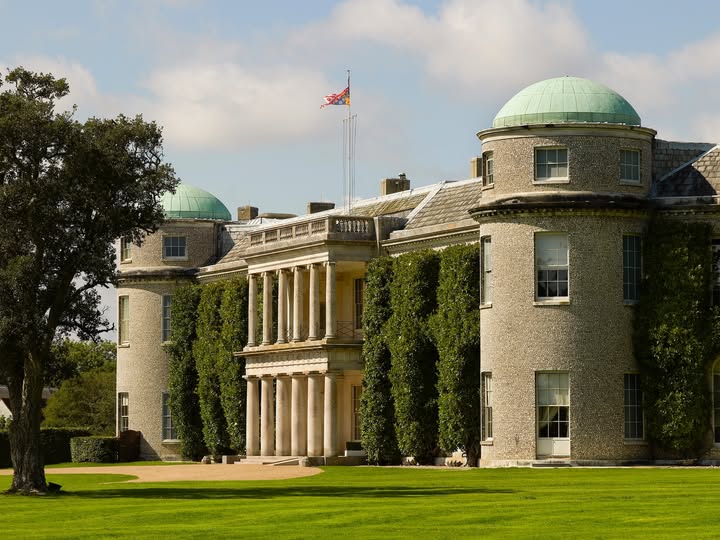
Goodwood: Balancing Heritage, Innovation, and Community Impact
Sarah Mayhead Talks About Goodwood: Balancing Heritage, Innovation, and Community Impact
In an era of rapid change, historic estates face a unique challenge: how to preserve their legacy while embracing modern sustainability practices and deepening community engagement. The Chichester Society recently invited Sarah Mayhead, Estate Charity and Community Coordinator of the Goodwood Group, to speak at a Coffee Morning Talk and share her valuable insights into how one of England’s most prestigious estates is navigating this complex landscape.
Redefining the Role of Historic Estates
Goodwood Estate, spanning centuries of British history, has developed a world-class reputation for horseracing, motorsport and agricultural innovation. However, under the current Duke’s leadership, the estate is evolving into a multifaceted institution that prioritizes philanthropy, environmental stewardship, and community partnerships alongside its commercial enterprises.
The creation of Sarah’s position itself reflects this shift. Originally a volunteer coordinating charity partnerships within the motorsport marketing team, she recognized the untapped potential in centralizing the estate’s scattered charitable efforts. When she approached the Duke post-Covid with a proposal to formalize this role, budget constraints initially prevented it. However, in late 2024, circumstances changed dramatically, and the Duke invited her to present her vision—a meeting that would transform both her role and the estate’s charitable trajectory.
Philanthropy at Scale: The King’s Trust International Campaign
The catalyst for Sarah’s appointment became clear when the King asked the Duke to chair an anniversary committee for King’s Trust International, the global branch of the King’s Trust dedicated to empowering young people in disadvantaged communities across 21 countries. The Duke’s ambitious response: raise £10 million in a single year.
What followed was a masterclass in strategic fundraising. The Duke assembled an influential committee and personally approached potential donors with remarkable persistence. Some initial refusals transformed into donations after the Duke extended invitations to Goodwood events, attended dinners where donors would be present, and demonstrated unwavering commitment to the cause. As Sarah recounted with admiration, some donors eventually capitulated, reportedly saying they would donate if he would simply “leave them alone”.
The results exceeded expectations. By year’s end, the campaign had raised £12.5 million, with additional donations still arriving. A gala dinner at St James’s Palace celebrated the major donors. The “Generation Potential” campaign now aims to help one million young people globally access meaningful employment and education over the next decade.
This success, while extraordinary, also presented a strategic challenge: having exhausted many wealthy contacts for King’s Trust International, the Duke and his team must now recalibrate expectations for 2026’s more modest fundraising targets while maintaining momentum for smaller local charities.
Consistent Charitable Impact
Beyond the King’s Trust International campaign, Goodwood’s regular charitable operations are substantial. In 2025, the estate raised nearly £2 million for various charities through its event partnerships. The Markel Magnolia Cup, an amateur female jockey race held during the Qatar Goodwood Festival, alone generated £834,000 for female-focused and children’s charities.
The estate’s approach to charity is multifaceted. Beyond event partnerships, Goodwood donates approximately £160,000 worth of tickets annually to local charities, schools, and projects for use in fundraising raffles and auctions. The estate also maintains a two-year rotating partnership with a local estate charity—currently the Aldingbourne Trust—involving staff volunteering, hosted events, and integrated community activities.
Notably, these charitable contributions are kept separate from event revenues. The estate maintains a dedicated company charitable fund supporting local organizations including Stone Pillow and the Chichester Counselling Service.
Heritage Preservation and Capital Investment
The Duke, now 71, is actively engaged in his “legacy phase,” addressing long-deferred estate improvements. Three major projects exemplify this commitment:
The Minerva Temple Reconstruction: A Roman stone commemorating Neptune and Minerva, discovered in Chichester in 1723, was acquired by the 2nd Duke. After King Edward VII allegedly complained it spoiled his view in the late 1800s, the temple was dismantled and the stone donated to the city—where it remains visible in the wall of the Council House today. The Duke and Duchess purchased the original statues in 2004 and have now begun reconstructing the temple in partnership with Historic England and the District Council.
South Lodge Gates: These grand entrance gates, inspired by architect James Wyatt’s existing designs, are being reconstructed using period-appropriate flintwork carefully matched to surrounding buildings.
Copper Dome Restoration: The house’s copper domes, untouched for over a century, are being systematically replaced with aged new copper. The project reveals intricate wooden frames beneath, some requiring structural repairs due to water damage.
Agricultural Innovation and Sustainability
Goodwood’s Home Farm, fully organic since the late 1980s, is embracing cutting-edge technology. A robotic dairy system allows over 200 cattle to choose their milking times, while computer mapping tracks individual udder configurations and provides real-time health data. The system has proven so effective that even a blind cow in the herd has successfully adapted to it.
The estate is also pioneering soil health innovation through partnership with Regenus, using fungi-enriched pellets to inoculate fields. This approach reduces reliance on fertilizers, improves water retention, and enhances climate resilience while producing significantly less carbon dioxide than conventional organic fertilizers. This initiative inspired Goodwood’s October health summit, hosted by Dr. Chris van Tulleken, exploring connections between soil health and human wellness.
Wildlife conservation efforts are equally sophisticated. Detailed bat corridor studies have informed extensive tree planting and hedgerow creation. The estate constructed a spiral bat hotel within a repurposed farm building, allowing bats to regulate temperature by roosting at different levels depending on weather conditions.
Sustainability and Community Relations
Goodwood’s commitment to sustainability extends to its major events. The Goodwood Revival now operates entirely on sustainable fuel, with wood from Festival of Speed structures repurposed for local schools and charities. The estate works closely with environmental health officers and traffic management organizations to minimize disruption to surrounding communities.
However, rapid housing development near the estate presents emerging challenges. New residential developments built without adequate noise disclosure have led to complaints, threatening the long-term viability of motorsport operations that financially support the entire estate.
Looking Forward
Sarah’s role exemplifies a broader trend among historic estates: recognizing that long-term sustainability requires balancing commercial success, community engagement, environmental stewardship, and heritage preservation. Her invitation to local organizations to explore collaborative partnerships signals genuine commitment to integration with the Chichester community.
For other estates and heritage institutions, Goodwood’s approach offers a compelling model: strategic philanthropy, technological innovation, transparent environmental commitment, and authentic community partnership can coexist with commercial operations and historic preservation.
As the Duke continues his legacy phase and Sarah expands her community engagement efforts, Goodwood Estate demonstrates that historic institutions need not choose between honouring their past and embracing their future.
Recorded by Ben Williams, ChiSoc Executive Committee member – with a little help from AI
Chichester City Council: Past, Present, and Future – A Glimpse into 800 Years of Civic Life
In a recent talk hosted by the Chichester Society at the 20 November coffee morning , Sam Tate, Town Clerk of Chichester City Council, delved into the council’s remarkable history and its evolving role in the city.
Historic Foundations
Chichester City Council stands among the oldest civic institutions in England, with roots reaching back at least 800 years. The earliest recorded mayor dates to 1239, and the city’s rich traditions—including mayor-making ceremonies and the annual mace procession to the cathedral—are still alive today. After centuries as a “closed corporation” dominated by a select few, the 1835 Municipal Corporations Act ushered in democratic elections, transforming the council into a more accountable body.
Changing Powers
The 1972 Local Government Act drastically reshaped local administration. Many powers—like housing, parks, and street lighting—shifted to the newly formed Chichester District Council, relegating the City Council to mainly ceremonial duties and small asset management. However, local advocacy ensured that Chichester retained its parish council and mayoralty, bucking the trend that saw similar councils abolished.
Present-Day Initiatives
Today, Chichester City Council manages valued community assets, such as the Council House, Market Cross, Litten Gardens, and select parks and burial grounds. The council plays a critical role in:
Supporting community projects: Grants have risen from £30,000 to £110,000 annually to boost voluntary groups and deliver initiatives like community forums, arts support, and the shop mobility scheme.
Promoting civic life: Organizing ceremonial events, civic awards, and fostering international twinning.
Enhancing public safety and amenities: Investing in street and park lighting, contributing £400,000 toward pavement and tree planting projects, and supporting upgrades to recreation areas.
Environmental stewardship: Improving council facilities for energy efficiency (solar panels, battery storage), and developing wildflower meadows and pollinator-friendly plantings.
Planning for new assets: Working to secure land for a much-needed community center in the city’s south.
Looking Ahead: Devolution and Reorganization
Significant change looms on the horizon with the anticipated English Devolution and Community Empowerment Bill. This legislation aims to establish a Mayoral Combined County Authority (MCCA) covering Sussex, placing powers such as strategic housing, transportation, public health, and emergency services under a directly elected regional mayor.
Moreover, the Bill is expected to abolish the current two-tier county/district system by 2028, replacing it with unitary authorities. There is ongoing consultation over whether West Sussex will be administered as a single Unitary Authority (with about 1 million residents) or split into two smaller unitaries. The City Council has expressed preference for the two-unitary model, citing better local representation, albeit with recognition that financial pressures may drive central government to opt for a single unitary—following the example set in Surrey.
What Does This Mean for Chichester?
The future will likely see parish and town councils take on greater responsibility for parks, public spaces, and community facilities as higher-tier authorities shed discretionary functions to deal with constrained budgets. Chichester City Council is already preparing—registering expressions of interest in taking over key parks and monitoring the government’s consultation process.
Financially, the City Council is flexible: its portion of council tax for a typical Band D property is £77.85 per year, raising about £970,000 annually, with the ability to adjust this precept if required to fund additional services.
Community Engagement
Finally, transparency and communication are firmly on the agenda, with the council looking to increase its outreach through e-newsletters (and considering print editions) to better keep residents informed and involved.
Final Thoughts
Through centuries of tradition, punctuated by waves of reform, Chichester City Council has adapted to the city’s changing needs. As it faces another era of transformation, its focus remains on supporting community life, preserving heritage, and serving the people of Chichester.
Interested in learning more or having your say on local government reorganization? Visit the Ministry of Housing, Communities and Local Government’s website for the latest consultation details, or sign up for the City Council newsletter via their official website.
 Recorded by Ben Williams, ChiSoc Executive Committee member – with a little help from AI
CHICHESTER SOCIETY: REGENERATION IN THE CITY
2026 JUNE 29 (Monday)
6pm at the Assembly Room, The Council House, North Street, Chichester PO19 1LQ
Our annual summer forum is an information-sharing event about significant local issues. Our topic this year is regeneration. Speakers from the District Council will explain Chichester’s regeneration strategy and specific proposals both short and long term.
Do come and contribute. All welcome
Tickets: no charge, but please reserve your seat via our website
Appeal for Executive Committee Members
We are currently looking for volunteers to help on our Executive Committee, in the roles of General Secretary and Membership Secretary:
General Secretary
Principal activities, to arrange:
- Executive Committee meetings every month except August. Discussions are held with the Chair to plan an Agenda.
Meeting minutes are written by another ChiSoc EC member - the Annual General Meeting in October. This includes liaison with the City Council to book the Assembly Room; and invite the Mayor to chair the AGM as a guest.
Administrative activities:
- Membership leaflets are updated as required
- Committee members contacts list is updated and distributed as needed.
- A similar list of senior staff at the District Council, especially the Planning Department, is also kept.
This description depends on the interest of the post-holder. Essential duties are working closely with the Chair to look after the Executive Committee and plan the AGM
Membership Secretary
The role of Membership Secretary involves managing the Membership list, dealing with new applications and noting changes to contact details etc.
It is an important role as maintaining our membership of over 500 households adds weight to our influence in the City.
Both roles represent an opportunity to engage with members and the work of the Society, as well as keeping abreast of important issues in our City.
Expertise required for both roles:
- Access to a Computer and printer/scanner
- Familiar with Email handling and Microsoft Office – Word & Excel
- Be or become a member of the Chichester Society!
The role of the Society is to preserve and enhance Chichester, and by participating like this, you’ll be adding to over 50 years involvement with Chichester’s civic life!
(our anniversary was in 2024).
Anyone beinterested is invited to initially contact our Chair, Sir Mark Featherstone-Witty, ideally by e-mail : chair@chichestersociety.org.uk or 01243 779710.
Chichester Regeneration Strategy 2024
Over the coming months, this is going to be a document that Chi Soc will get behind, with our focus on planning – https://www.chichester.gov.uk/regeneration-strategy
Chichester City Council: Past, Present, and Future
A Glimpse into 800 Years of Civic Life
In a recent talk hosted by the Chichester Society, Sam Tate, Town Clerk of Chichester City Council, delved into the council’s remarkable history and its evolving role in the city.
Historic Foundations
Chichester City Council stands among the oldest civic institutions in England, with roots reaching back at least 800 years. The earliest recorded mayor dates to 1239, and the city’s rich traditions—including mayor-making ceremonies and the annual mace procession to the cathedral—are still alive today. After centuries as a “closed corporation” dominated by a select few, the 1835 Municipal Corporations Act ushered in democratic elections, transforming the council into a more accountable body.
Changing Powers
The 1972 Local Government Act drastically reshaped local administration. Many powers—like housing, parks, and street lighting—shifted to the newly formed Chichester District Council, relegating the City Council to mainly ceremonial duties and small asset management. However, local advocacy ensured that Chichester retained its parish council and mayoralty, bucking the trend that saw similar councils abolished.
Present-Day Initiatives
Today, Chichester City Council manages valued community assets, such as the Council House, Market Cross, Litten Gardens, and select parks and burial grounds.
The council plays a critical role in:
Supporting community projects: Grants have risen from £30,000 to £110,000 annually to boost voluntary groups and deliver initiatives like community forums, arts support, and the shop mobility scheme.
Promoting civic life: Organizing ceremonial events, civic awards, and fostering international twinning.
Enhancing public safety and amenities: Investing in street and park lighting, contributing £400,000 toward pavement and tree planting projects, and supporting upgrades to recreation areas.
Environmental stewardship: Improving council facilities for energy efficiency (solar panels, battery storage), and developing wildflower meadows and pollinator-friendly plantings.
Planning for new assets: Working to secure land for a much-needed community center in the city’s south.
Looking Ahead: Devolution and Reorganization
Significant change looms on the horizon with the anticipated English Devolution and Community Empowerment Bill. This legislation aims to establish a Mayoral Combined County Authority (MCCA) covering Sussex, placing powers such as strategic housing, transportation, public health, and emergency services under a directly elected regional mayor.
Moreover, the Bill is expected to abolish the current two-tier county/district system by 2028, replacing it with unitary authorities. There is ongoing consultation over whether West Sussex will be administered as a single Unitary Authority (with about 1 million residents) or split into two smaller unitaries. The City Council has expressed preference for the two-unitary model, citing better local representation, albeit with recognition that financial pressures may drive central government to opt for a single unitary—following the example set in Surrey.
What Does This Mean for Chichester?
The future will likely see parish and town councils take on greater responsibility for parks, public spaces, and community facilities as higher-tier authorities shed discretionary functions to deal with constrained budgets. Chichester City Council is already preparing—registering expressions of interest in taking over key parks and monitoring the government’s consultation process.
Financially, the City Council is flexible: its portion of council tax for a typical Band D property is £77.85 per year, raising about £970,000 annually, with the ability to adjust this precept if required to fund additional services.
Community Engagement
Finally, transparency and communication are firmly on the agenda, with the council looking to increase its outreach through e-newsletters (and considering print editions) to better keep residents informed and involved.
Final Thoughts
Through centuries of tradition, punctuated by waves of reform, Chichester City Council has adapted to the city’s changing needs. As it faces another era of transformation, its focus remains on supporting community life, preserving heritage, and serving the people of Chichester.
Interested in learning more or having your say on local government reorganization? Visit the Ministry of Housing, Communities and Local Government’s website for the latest consultation details, or sign up for the City Council newsletter via their official website.
Recorded by Ben Williams, ChiSoc Executive Committee member – with a little help from AI