Sarah Mayhead Talks About Goodwood: Balancing Heritage, Innovation, and Community Impact
In an era of rapid change, historic estates face a unique challenge: how to preserve their legacy while embracing modern sustainability practices and deepening community engagement. The Chichester Society recently invited Sarah Mayhead, Estate Charity and Community Coordinator of the Goodwood Group, to speak at a Coffee Morning Talk and share her valuable insights into how one of England’s most prestigious estates is navigating this complex landscape.
Redefining the Role of Historic Estates
Goodwood Estate, spanning centuries of British history, has developed a world-class reputation for horseracing, motorsport and agricultural innovation. However, under the current Duke’s leadership, the estate is evolving into a multifaceted institution that prioritizes philanthropy, environmental stewardship, and community partnerships alongside its commercial enterprises.
The creation of Sarah’s position itself reflects this shift. Originally a volunteer coordinating charity partnerships within the motorsport marketing team, she recognized the untapped potential in centralizing the estate’s scattered charitable efforts. When she approached the Duke post-Covid with a proposal to formalize this role, budget constraints initially prevented it. However, in late 2024, circumstances changed dramatically, and the Duke invited her to present her vision—a meeting that would transform both her role and the estate’s charitable trajectory.
Philanthropy at Scale: The King’s Trust International Campaign
The catalyst for Sarah’s appointment became clear when the King asked the Duke to chair an anniversary committee for King’s Trust International, the global branch of the King’s Trust dedicated to empowering young people in disadvantaged communities across 21 countries. The Duke’s ambitious response: raise £10 million in a single year.
What followed was a masterclass in strategic fundraising. The Duke assembled an influential committee and personally approached potential donors with remarkable persistence. Some initial refusals transformed into donations after the Duke extended invitations to Goodwood events, attended dinners where donors would be present, and demonstrated unwavering commitment to the cause. As Sarah recounted with admiration, some donors eventually capitulated, reportedly saying they would donate if he would simply “leave them alone”.
The results exceeded expectations. By year’s end, the campaign had raised £12.5 million, with additional donations still arriving. A gala dinner at St James’s Palace celebrated the major donors. The “Generation Potential” campaign now aims to help one million young people globally access meaningful employment and education over the next decade.
This success, while extraordinary, also presented a strategic challenge: having exhausted many wealthy contacts for King’s Trust International, the Duke and his team must now recalibrate expectations for 2026’s more modest fundraising targets while maintaining momentum for smaller local charities.
Consistent Charitable Impact
Beyond the King’s Trust International campaign, Goodwood’s regular charitable operations are substantial. In 2025, the estate raised nearly £2 million for various charities through its event partnerships. The Markel Magnolia Cup, an amateur female jockey race held during the Qatar Goodwood Festival, alone generated £834,000 for female-focused and children’s charities.
The estate’s approach to charity is multifaceted. Beyond event partnerships, Goodwood donates approximately £160,000 worth of tickets annually to local charities, schools, and projects for use in fundraising raffles and auctions. The estate also maintains a two-year rotating partnership with a local estate charity—currently the Aldingbourne Trust—involving staff volunteering, hosted events, and integrated community activities.
Notably, these charitable contributions are kept separate from event revenues. The estate maintains a dedicated company charitable fund supporting local organizations including Stone Pillow and the Chichester Counselling Service.
Heritage Preservation and Capital Investment
The Duke, now 71, is actively engaged in his “legacy phase,” addressing long-deferred estate improvements. Three major projects exemplify this commitment:
The Minerva Temple Reconstruction: A Roman stone commemorating Neptune and Minerva, discovered in Chichester in 1723, was acquired by the 2nd Duke. After King Edward VII allegedly complained it spoiled his view in the late 1800s, the temple was dismantled and the stone donated to the city—where it remains visible in the wall of the Council House today. The Duke and Duchess purchased the original statues in 2004 and have now begun reconstructing the temple in partnership with Historic England and the District Council.
South Lodge Gates: These grand entrance gates, inspired by architect James Wyatt’s existing designs, are being reconstructed using period-appropriate flintwork carefully matched to surrounding buildings.
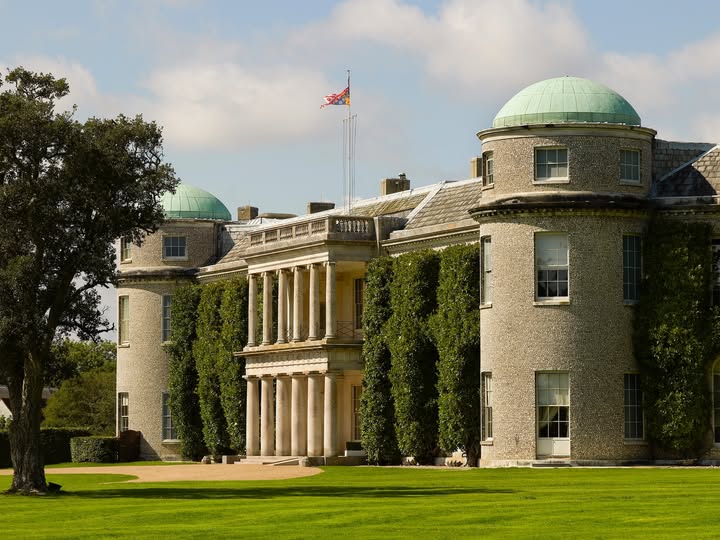
Copper Dome Restoration: The house’s copper domes, untouched for over a century, are being systematically replaced with aged new copper. The project reveals intricate wooden frames beneath, some requiring structural repairs due to water damage.
Agricultural Innovation and Sustainability
Goodwood’s Home Farm, fully organic since the late 1980s, is embracing cutting-edge technology. A robotic dairy system allows over 200 cattle to choose their milking times, while computer mapping tracks individual udder configurations and provides real-time health data. The system has proven so effective that even a blind cow in the herd has successfully adapted to it.
The estate is also pioneering soil health innovation through partnership with Regenus, using fungi-enriched pellets to inoculate fields. This approach reduces reliance on fertilizers, improves water retention, and enhances climate resilience while producing significantly less carbon dioxide than conventional organic fertilizers. This initiative inspired Goodwood’s October health summit, hosted by Dr. Chris van Tulleken, exploring connections between soil health and human wellness.
Wildlife conservation efforts are equally sophisticated. Detailed bat corridor studies have informed extensive tree planting and hedgerow creation. The estate constructed a spiral bat hotel within a repurposed farm building, allowing bats to regulate temperature by roosting at different levels depending on weather conditions.
Sustainability and Community Relations
Goodwood’s commitment to sustainability extends to its major events. The Goodwood Revival now operates entirely on sustainable fuel, with wood from Festival of Speed structures repurposed for local schools and charities. The estate works closely with environmental health officers and traffic management organizations to minimize disruption to surrounding communities.
However, rapid housing development near the estate presents emerging challenges. New residential developments built without adequate noise disclosure have led to complaints, threatening the long-term viability of motorsport operations that financially support the entire estate.
Looking Forward
Sarah’s role exemplifies a broader trend among historic estates: recognizing that long-term sustainability requires balancing commercial success, community engagement, environmental stewardship, and heritage preservation. Her invitation to local organizations to explore collaborative partnerships signals genuine commitment to integration with the Chichester community.
For other estates and heritage institutions, Goodwood’s approach offers a compelling model: strategic philanthropy, technological innovation, transparent environmental commitment, and authentic community partnership can coexist with commercial operations and historic preservation.
As the Duke continues his legacy phase and Sarah expands her community engagement efforts, Goodwood Estate demonstrates that historic institutions need not choose between honouring their past and embracing their future.
Recorded by Ben Williams, ChiSoc Executive Committee member – with a little help from AI